
 +86 -0574-62268622


For beauty and personal care brands selling across Indonesia, a lotion pump is not just a dispenser—it is a frontline defense against freight failure. Products may move by container ship, truck, and local delivery routes before reaching consumers, all while facing high humidity, heat above 32°C, vibration, and pressure shifts. Standard screw-down pumps can leak, purge formula, or actuate accidentally under these conditions. This article examines how left-right locking pump mechanisms reduce those risks through a 90-degree rotary seal, why they matter for island logistics, and what procurement teams should evaluate when choosing packaging for liquid cosmetics.
Why Left-Right Lock Lotion Pumps Require Engineering Attention
The complex geography of Indonesia presents unique logistical hurdles for the cosmetic packaging industry. Transporting liquid formulations across thousands of islands involves containerized shipping, trucking legs on unpaved provincial roads, and extreme tropical climate variations. With average humidity exceeding 80% and temperatures frequently peaking above 32°C, the physical stress on primary packaging is immense. These environmental stressors expose liquid products to constant vibration and atmospheric pressure fluctuations, making robust dispensing closures critical for brand reliability.
This article outlines how left-right lock lotion pumps address these specific logistical challenges. By examining the underlying failure modes and mechanical solutions, procurement teams can better understand how these specialized dispensers prevent transit damage and ensure products arrive intact for the end consumer.
How Left-Right Lock Pumps Differ from Standard Lotion Pumps
Standard lotion dispensers typically rely on an up-down locking mechanism, widely known as a screw-down lock. This traditional design requires the end-user or the factory assembly line to fully depress the actuator and twist it into the collar to seal the bottle. Consequently, this mechanical action forces the dispensing of a typical 2.0ml to 3.0ml of product just to secure the pump for travel, resulting in formula waste and a messy nozzle that requires secondary cleaning.
Conversely, left-right lock lotion pumps utilize a horizontal rotary actuator (also referred to as a 90-degree twist mechanism). This design locks and unlocks the fluid pathway via a simple 90-degree twist without depressing the stem. This locking mechanism ensures that the actuator remains flush and fully sealed, eliminating the need to purge the pump chamber before packing. While these rotational mechanisms can add to the overall part count and manufacturing cost compared to standard designs, their waste-reduction benefits make them highly suitable for high-value cosmetic packaging.
Common Leakage, Burst, and Spillage Failure Modes
During inter-island transit, cargo holds experience sustained vibration. Standard up-down pumps are highly susceptible to typical transit vibration frequencies, which often range between 10Hz and 50Hz in standard testing. These vibrations can gradually disengage the internal piston seal or cause accidental actuation. This mechanical vulnerability leads to micro-leaks or catastrophic bursts when the bottles are subjected to sudden pressure spikes during loading and unloading.
Furthermore, temperature swings inside unventilated shipping containers can cause liquid expansion, which exacerbates the risk of standard packaging failures during Indonesian domestic freight. Left-right lock lotion pumps are designed to mitigate these spillage failure modes by maintaining a rigid, mechanically isolated seal. Because they do not rely on vertical spring tension to stay closed, they eliminate spring-back pressure and accidental actuation, keeping the product securely contained against environmental expansion and dynamic transit shocks.
How Left-Right Lock Lotion Pumps Prevent Leaks and Contamination
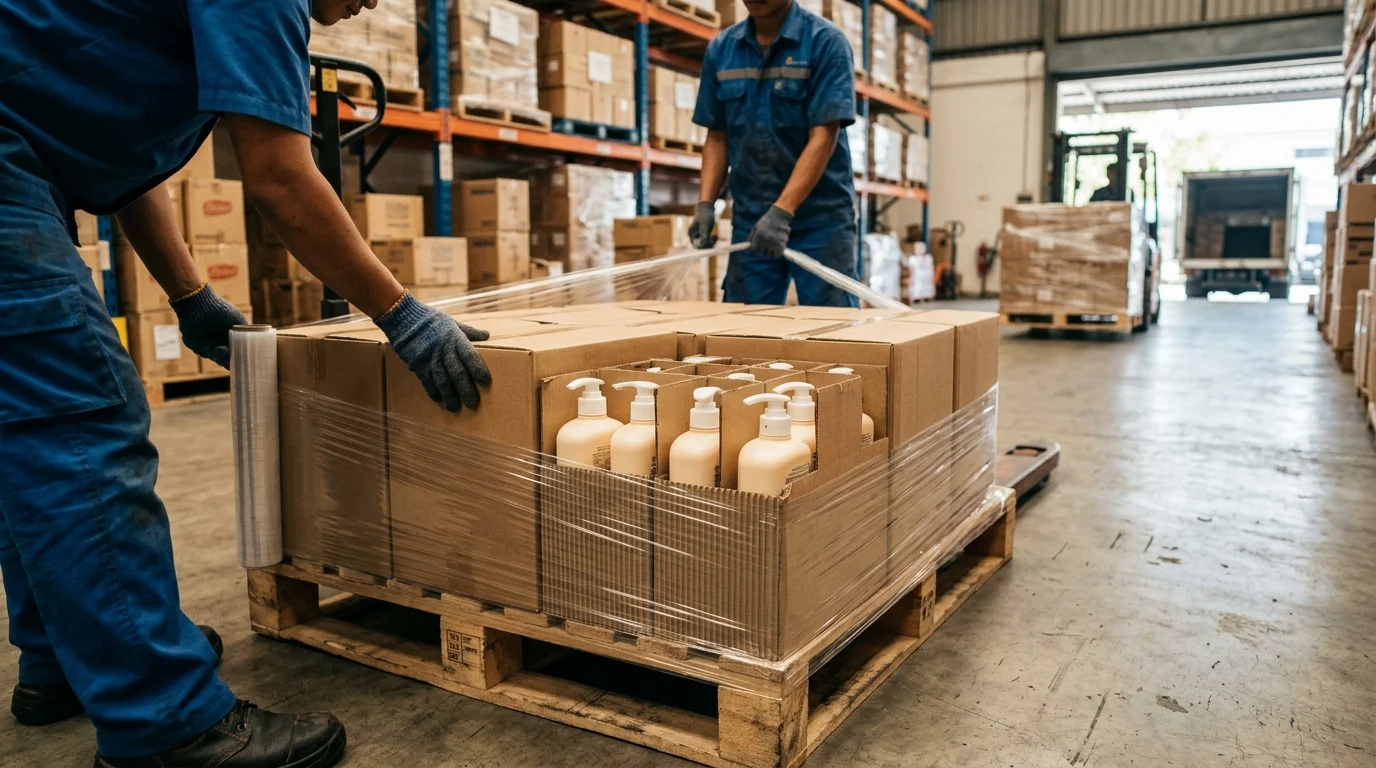
While the previous section highlights the logistical hazards, effective leak prevention in left-right lock lotion pumps relies on precise internal geometry and advanced valving technology. Engineering these dispensers requires a deep understanding of fluid dynamics and material science to help ensure that primary sealing points remain secure during prolonged storage.
How the Anti-Spill Sealing Structure Works
The core of the anti-spill sealing structure is a specialized cam mechanism integrated into the actuator and stem assembly. When rotated to the locked position, the internal fluid channel is physically blocked, isolating the product in the dip tube from the dispensing orifice. This isolation prevents capillary action and accidental discharge, even when the bottle is inverted.
High-quality left-right lock lotion pumps are engineered to withstand simulated internal pressure differentials during rigorous testing without yielding, provided the correct bottle and gasket combination is used. This structural integrity is achieved through tight tolerances between the sub-stem and the housing. However, while highly effective, repeated actuation cycles over the product's lifespan can eventually wear the cam mechanism, making initial material selection critical.
| Specification | Up-Down Lock Pumps | Left-Right Lock Pumps |
|---|---|---|
| Locking Action | Vertical depression + twist | 90-degree horizontal rotation |
| Product Waste on Lock | 2.0ml - 3.0ml | Typically 0.0ml (design dependent) |
| Transit Pressure Resistance | Lower (relies on spring tension) | Higher (design & gasket dependent) |
| Vibration Tolerance | Prone to accidental actuation | Resistant to accidental actuation |
Why External Non-Contact Springs Matter for Sensitive Formulas
Modern cosmetic formulations, such as AHA/BHA body lotions, high-SPF sunscreens, and active botanical serums, are highly sensitive to metallic interactions. Standard pumps often submerge the metal return spring directly in the fluid pathway, which can lead to oxidation, rust, and severe formula degradation over time, particularly in hot and humid climates.
Left-right lock lotion pumps frequently incorporate an external non-contact spring design. By positioning the spring outside the fluid housing chamber, the product only touches the inert plastic components and the glass ball valve. This engineering choice protects sensitive formulas, preventing heavy metal contamination and ensuring migration limits are kept well below strict regulatory thresholds. Consequently, utilizing external spring pumps can potentially extend the effective shelf life of reactive cosmetic formulations, helping to maintain product efficacy throughout its intended shelf life.
How Indonesian Brands Should Specify and Source Pumps
Procuring the right cosmetic packaging demands a strategic approach, particularly when supplying a geographically fragmented market like Indonesia. Brands must closely align their technical specifications with supplier capabilities, local bottle suppliers, and BPOM (Badan Pengawas Obat dan Makanan) registration requirements for packaging migration limits. This alignment ensures the selected left-right lock lotion pumps function reliably under regional logistics constraints, such as monsoon-season shipping.
Key Criteria for Comparing Locking Mechanisms
When evaluating locking mechanisms for complex distributor networks, procurement specialists must scrutinize the actuator's rotational torque and the pump's dosage consistency. The rotation torque must be carefully calibrated—typically measured in the N·cm range during standard quality control, depending on the specific design. If the torque is too low, the pump may accidentally unlock during turbulent shipping; if it is too high, it frustrates the end-user.
Key Takeaways
- Choose left-right lock lotion pumps for Indonesian domestic freight where humidity above 80%, temperatures above 32°C, and multimodal transport increase leakage risk.
- Use 90-degree rotary locking pumps to seal the actuator without depressing it, preventing the 2.0ml to 3.0ml formula purge common with screw-down pumps.
- Prioritize mechanically isolated locking designs when products must withstand sustained transit vibration in the 10Hz to 50Hz range.
- Account for higher component cost in left-right lock pumps, but compare it against savings from reduced leakage claims, cleaner packing, and lower product waste.
- Specify robust pump sealing for bottles shipped through unventilated containers, where heat-driven liquid expansion can worsen leakage and burst failures.
Frequently Asked Questions
1. What is a left-right lock lotion pump?
It is a lotion dispenser with a horizontal rotary actuator, usually unlocked or locked with a 90-degree twist, so the pump can be sealed without pressing the actuator down.
2. Why are left-right lock pumps useful for Indonesian logistics?
Indonesia’s island-to-island freight exposes packaging to humidity above 80%, heat often above 32°C, vibration, and pressure changes. A left-right lock helps prevent accidental actuation and transit leakage.
3. How do left-right lock pumps reduce product waste?
Unlike screw-down pumps, they do not require depressing the actuator to lock. This avoids purging about 2.0ml to 3.0ml of formula during packing and keeps the nozzle cleaner.
4. Are left-right lock lotion pumps more expensive than standard pumps?
They can cost more because the rotary mechanism may require additional components and tighter manufacturing control, but the added cost can be offset by fewer leaks, cleaner packing, and reduced formula loss.
5. What transport problems can standard lotion pumps face?
Standard pumps can loosen under 10Hz to 50Hz transit vibration, suffer accidental actuation, leak under pressure spikes, or fail when liquid expands in hot shipping containers.